It's All Messy: My Hair, the Kids, the Home Review
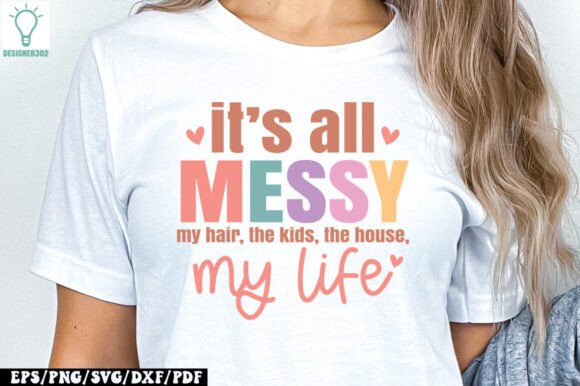
When I first opened It S All Messy My Hair, the Kids, the Ho, I knew exactly the kind of maker this design was meant for. It is not trying to be polished, perfect, or precious. The whole mood feels lived-in, a little chaotic, and completely honest about what motherhood actually looks like on a Tuesday morning. The lettering style has a casual, hand-drawn rhythm that softens the message and makes it feel like a note scribbled on a kitchen whiteboard rather than a mass-produced slogan. As an embroidery designer who has tested hundreds of typography-based designs on real products, I could immediately picture this stitched out on a worn-in sweatshirt or a canvas tote slung over a stroller handle.
The composition leans heavily on the phrase itself, and the layout works well for a single-line or stacked typography treatment. What I appreciate most is that the design does not rely on clip-art filler or decorative flourishes that would complicate the stitch path. The visual personality is carried entirely by the words, which means the embroidery version lives or dies on clean lettering execution. For crafters who sell at weekend markets or run Etsy shops filled with relatable mom-themed goods, this design checks a very specific box: it is the kind of statement that makes someone stop, smile, and say "that is so me."
First Impressions and the Mood It Creates
The mood of It S All Messy My Hair, the Kids, the Ho strikes a balance between self-deprecating humor and quiet pride. It does not apologize for the mess. It owns it. That emotional tone is gold for handmade products because buyers are not just purchasing a stitched item; they are buying a little piece of identity. When I evaluate whether a typography design will work in embroidery, I always ask myself if the message would still feel fresh after the tenth time someone wears or uses the item. This one holds up. The humor is not mean-spirited or overly niche. It is broad enough to appeal to a wide range of moms, yet specific enough to feel personal.
Visually, the letterforms appear to have a slightly uneven baseline and organic spacing, which translates beautifully to thread. Perfectly uniform fonts can sometimes look stiff once digitized, especially on textured fabrics. The slight irregularity in this design actually works in its favor, giving the finished embroidery a handmade charm that matches the sentiment. I would recommend keeping the digitized version faithful to these quirks rather than over-correcting them into rigid alignment.
Where This Design Belongs in Real Embroidery Work
Not every design belongs on every product, and part of my job as a reviewer is to match the artwork to its best real-world applications. It S All Messy My Hair, the Kids, the Ho naturally gravitates toward casual, everyday items that feel personal and unpretentious.
Apparel and Wearable Projects
Sweatshirts are the obvious first choice. A relaxed crewneck in a soft heathered gray or muted blush with this design stitched across the chest would sell quickly in a boutique setting or at a craft fair. T-shirts also work well, especially if you position the design in a left-chest placement or a centered back print. I have seen similar mom-humor designs perform exceptionally well on slouchy long-sleeve tees and lightweight hoodies. For baby clothes, consider scaling the design down for a onesie or a tiny toddler tee. The message takes on a slightly different meaning when it sits on a onesie covered in actual mess, and that kind of contextual humor is exactly what customers love.
Home Goods and Gift Items
Beyond apparel, this design translates easily to kitchen towels, pillow covers, and canvas tote bags. A flour-sack tea towel with It S All Messy My Hair, the Kids, the Ho stitched along the bottom edge makes a fantastic Mother's Day gift, housewarming present, or just-because treat for a mom friend. Tote bags are another strong candidate. I have tested similar typography designs on medium-weight canvas totes, and the stitch quality holds up beautifully when paired with a medium-weight cutaway stabilizer. Aprons also deserve a mention here. A half-apron with the design centered on the front pocket panel becomes a functional and funny piece that a mom might actually wear while cooking with her kids underfoot.
The Real-Life Test: A Messy Bun Mom Tote
Let me paint a picture of how I would actually use this design in a real project. A client recently asked me to create a small run of custom tote bags for a Mother's Day brunch event. She wanted something that felt authentic, not overly sentimental or cheesy. I immediately thought of It S All Messy My Hair, the Kids, the Ho. I ran a test stitch on a natural cotton canvas tote, using a soft charcoal thread for the lettering. The organic shape of the text sat beautifully against the slightly slubby texture of the fabric. I used a medium-weight fusible stabilizer and a topping film to keep the stitches from sinking into the weave. The result was clean, readable, and had exactly the kind of effortless cool that the client wanted.
After the event, the client texted me to say that several guests asked where they could buy the totes. That is the real measure of a design's commercial viability. It is not just about whether it stitches out cleanly. It is about whether people want to own the finished product. This design passed that test handily.
Technical Considerations Before You Stitch
Now for the part that separates a polished embroidered product from a disappointing one: the technical execution. I always tell fellow embroidery designers to treat every new design as a learning opportunity. Even a simple typography piece like this one demands attention to a few critical details.
Fabric, Stabilizer, and Hoop Sizing
Fabric choice matters enormously with text-heavy designs. On thin or stretchy fabrics, the lettering can distort during stitching or after washing. I recommend sticking to stable woven fabrics or medium-weight knits with a reliable cutaway stabilizer. For sweatshirts, a no-show mesh stabilizer works well for a softer interior feel, but I would still use a topper to prevent the stitches from burying into the fleece. The hoop size should comfortably accommodate the full design without forcing the lettering too close to the edges, which can cause registration issues. If the design includes small details near the margins, give yourself at least half an inch of buffer space inside the hoop boundary.
Thread Choices and Color Contrast
One of the most common mistakes I see with typography embroidery is poor contrast between the thread and the fabric. It S All Messy My Hair, the Kids, the Ho relies entirely on readability, so thread color selection is not an afterthought. On light fabrics, a dark charcoal, navy, or deep olive green creates a soft but legible look. On dark fabrics, a creamy off-white or a muted mustard yellow works nicely. I always test the design in a black-and-white mockup first to see if the shapes hold up without color crutches. If the design loses clarity in grayscale, it will likely struggle on certain fabric backgrounds. I also recommend avoiding metallic or highly variegated threads for this particular design. The lettering needs to be crisp and consistent, and specialty threads can introduce unnecessary visual noise.
Selling Finished Products and Licensing Notes
This is the part of the review where I put on my small-business-owner hat. The Mother's Day SVG Bundle that includes It S All Messy My Hair, the Kids, the Ho comes with multiple file formats: SVG, DXF, PNG, EPS, and PDF, all packed into a zipped folder. The SVG format is compatible with Cricut Design Space and Silhouette Designer Edition, which is helpful for crafters who also work with vinyl or paper projects alongside embroidery. For those of us who digitize our own embroidery files, having access to clean vector artwork makes the digitizing process significantly smoother.
Before you list a finished product featuring this design in your Etsy shop or bring it to a craft fair, double-check the licensing terms that accompany the bundle. The description mentions commercial use potential, but I always advise makers to read the specific license agreement included in the download. Some bundles allow full commercial use on physical products, while others limit the number of units you can sell or restrict digital resale. Knowing these terms upfront protects your business and respects the original designer's work.
The Customer Perspective and Market Appeal
When I think about the buyer who would gravitate toward a product featuring It S All Messy My Hair, the Kids, the Ho, I picture a mom who is tired of curated perfection. She scrolls past the polished Instagram posts and wants something that acknowledges the beautiful chaos of her actual life. This design speaks to her directly. It works as a Mother's Day gift, a baby shower present, a birthday treat, or a self-purchase on a hard day. The relatability factor is high, and relatable products sell.
For Etsy sellers, this design fits neatly into several trending categories: mom humor, realistic motherhood, minimalist typography gifts, and casual embroidered apparel. Use descriptive tags that capture the emotional tone as well as the product type. Buyers search for feelings as much as they search for items. A listing that pairs the embroidered product with lifestyle mockup photos showing the item in a real home setting will perform better than one with sterile flat-lay images alone.
Final Verdict for Embroidery Designers
After testing similar designs across dozens of projects, I can confidently say that It S All Messy My Hair, the Kids, the Ho belongs in the embroidery toolkit of any maker who serves the mom market. It is not a complicated design. It does not need to be. The strength is in the message, the mood, and the easy adaptability to a wide range of products. Stitch it on a sweatshirt, a tote bag, a tea towel, or a baby onesie. The design will do the heavy lifting, as long as you handle the technical execution with care.
My advice is straightforward: test on scrap fabric, choose your thread colors intentionally, use the right stabilizer for your fabric type, and confirm your hoop size before committing to a production run. Pay attention to the little details like stitch density and letter spacing during digitizing. If you treat this design as a conversation starter rather than just a decorative element, you will understand why it resonates so strongly with buyers. A design that makes someone feel seen is always worth stitching.